


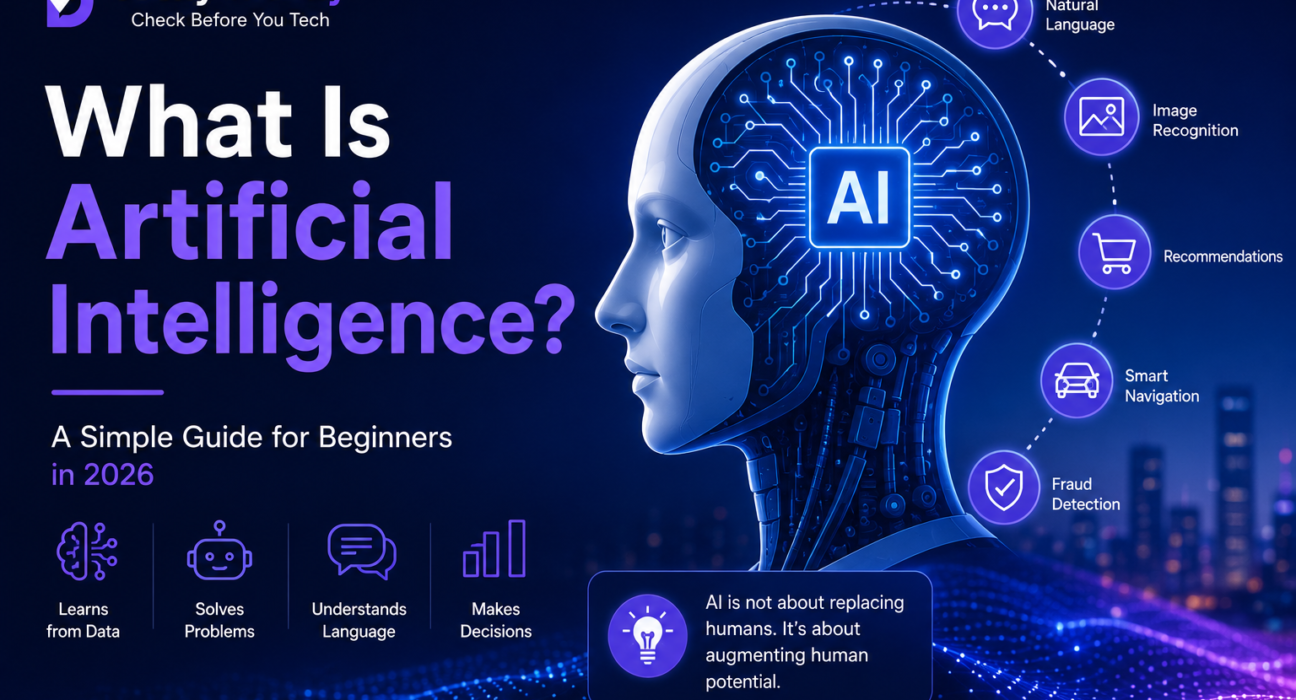
Artificial Intelligence has become one of the most talked about technologies in the world.
You hear about it in business meetings, technology conferences, social media discussions, and even everyday conversations. Companies are investing billions into AI. Governments are developing AI strategies. Students are learning AI skills. Businesses are using AI tools to save time and improve productivity.
But despite all the attention, many people still ask the same question.
What exactly is Artificial Intelligence?
The answer is simpler than most people think.
Understanding Artificial Intelligence
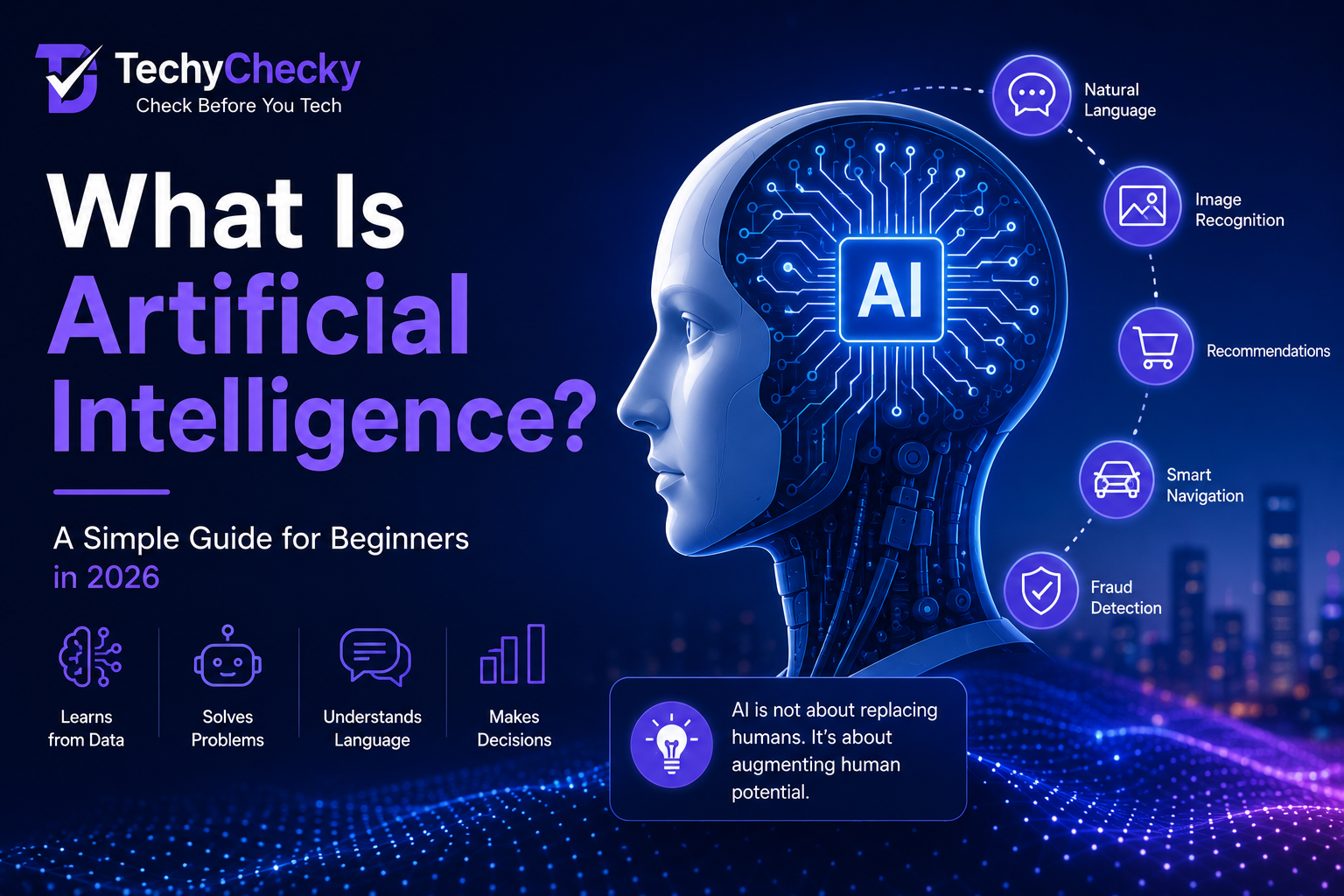
Artificial Intelligence, commonly known as AI, refers to computer systems that can perform tasks that normally require human intelligence.
These tasks may include:
- Understanding language
- Recognizing images
- Solving problems
- Learning from data
- Making recommendations
- Answering questions
Instead of simply following fixed instructions, AI systems can analyze information, identify patterns, and improve their performance over time.
Think of AI as teaching a computer how to learn rather than telling it exactly what to do every single time.
A Simple Real World Example
Imagine you use a music streaming app.
Over time, the app begins recommending songs that match your taste.
How does it know what you like?
It studies your listening habits, compares them with millions of other users, and predicts what songs you are most likely to enjoy.
That prediction process is powered by Artificial Intelligence.
The same concept is used by online shopping websites, video streaming platforms, navigation apps, and many other digital services.
How Does Artificial Intelligence Work?
At its core, AI learns from data.
The more relevant information it receives, the better it becomes at making decisions and predictions.
A simplified process looks like this:
- Data is collected.
- The AI system analyzes patterns.
- The system learns from those patterns.
- It generates predictions or recommendations.
- Results improve as more data becomes available.
This ability to learn from experience is what makes AI different from traditional software.
Artificial Intelligence Is Already Around You
Many people think AI is something futuristic.
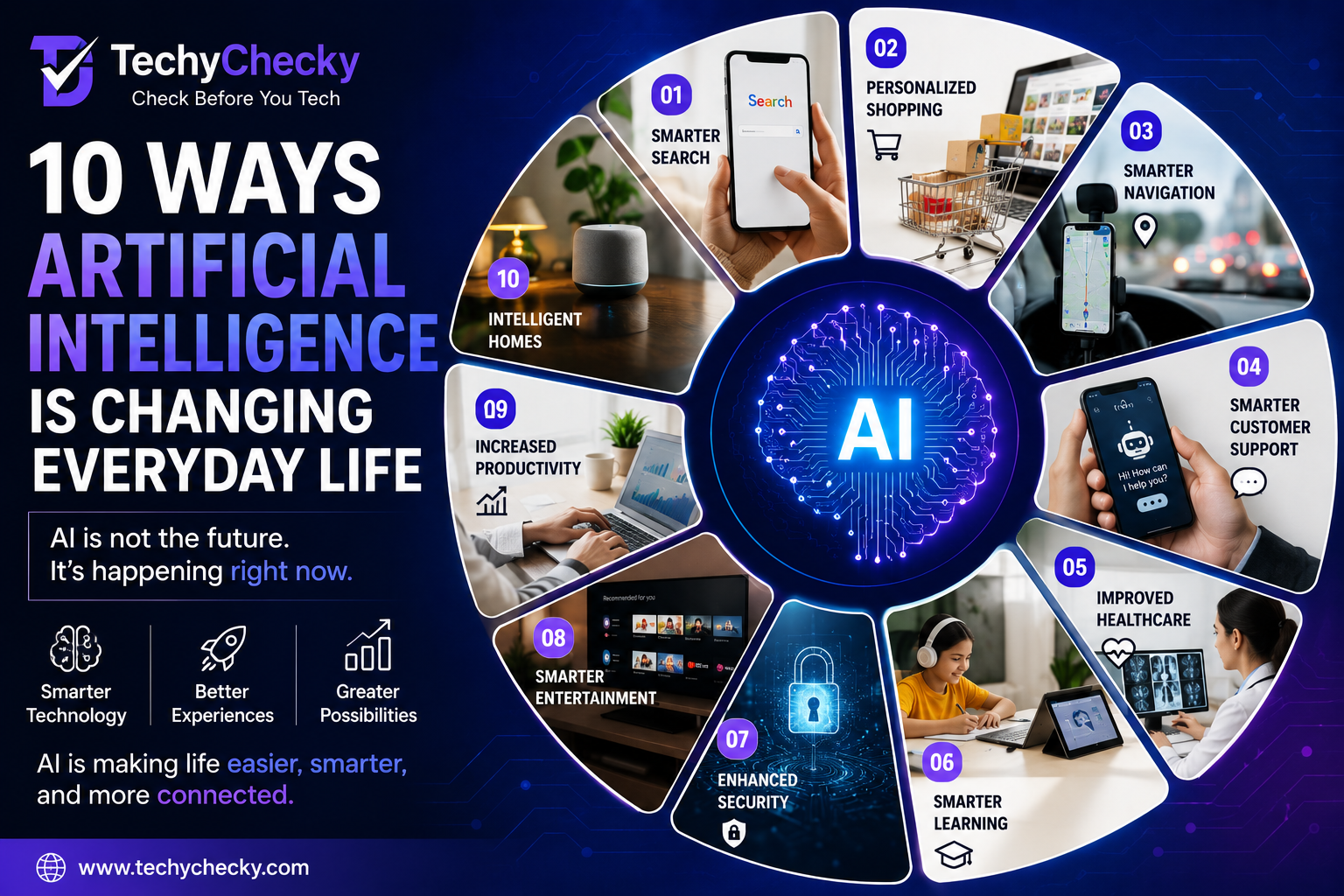
The reality is that most of us use AI every day without realizing it.
Examples include:
Virtual Assistants
Voice assistants can answer questions, set reminders, and perform tasks using natural language processing.
Navigation Apps
Traffic predictions and route recommendations are powered by AI systems that analyze millions of data points.
Online Shopping
Product recommendations are generated using customer behavior and purchasing patterns.
Email Filtering
Spam filters automatically identify unwanted emails before they reach your inbox.
Social Media
Platforms use AI to determine which content appears in your feed.
AI is no longer a future technology.
It is already part of daily life.
What Is Machine Learning?
When discussing AI, you will often hear the term Machine Learning.
Machine Learning is a branch of Artificial Intelligence.
It allows systems to learn from data without being specifically programmed for every scenario.
For example:
If you want a computer to recognize cats in photos, you can show it thousands of cat images.
Over time, the system learns what characteristics make a cat look like a cat.
The more examples it sees, the more accurate it becomes.
Machine Learning is one of the key technologies driving today’s AI revolution.
How Businesses Are Using AI
Businesses across nearly every industry are adopting AI solutions.
Some common applications include:
- Customer support chatbots
- Fraud detection
- Marketing automation
- Data analysis
- Inventory management
- Predictive forecasting
- Content creation assistance
AI helps organizations work faster, reduce costs, and make better decisions.
Small businesses are also benefiting because many AI tools are now affordable and easy to use.
Common Myths About Artificial Intelligence
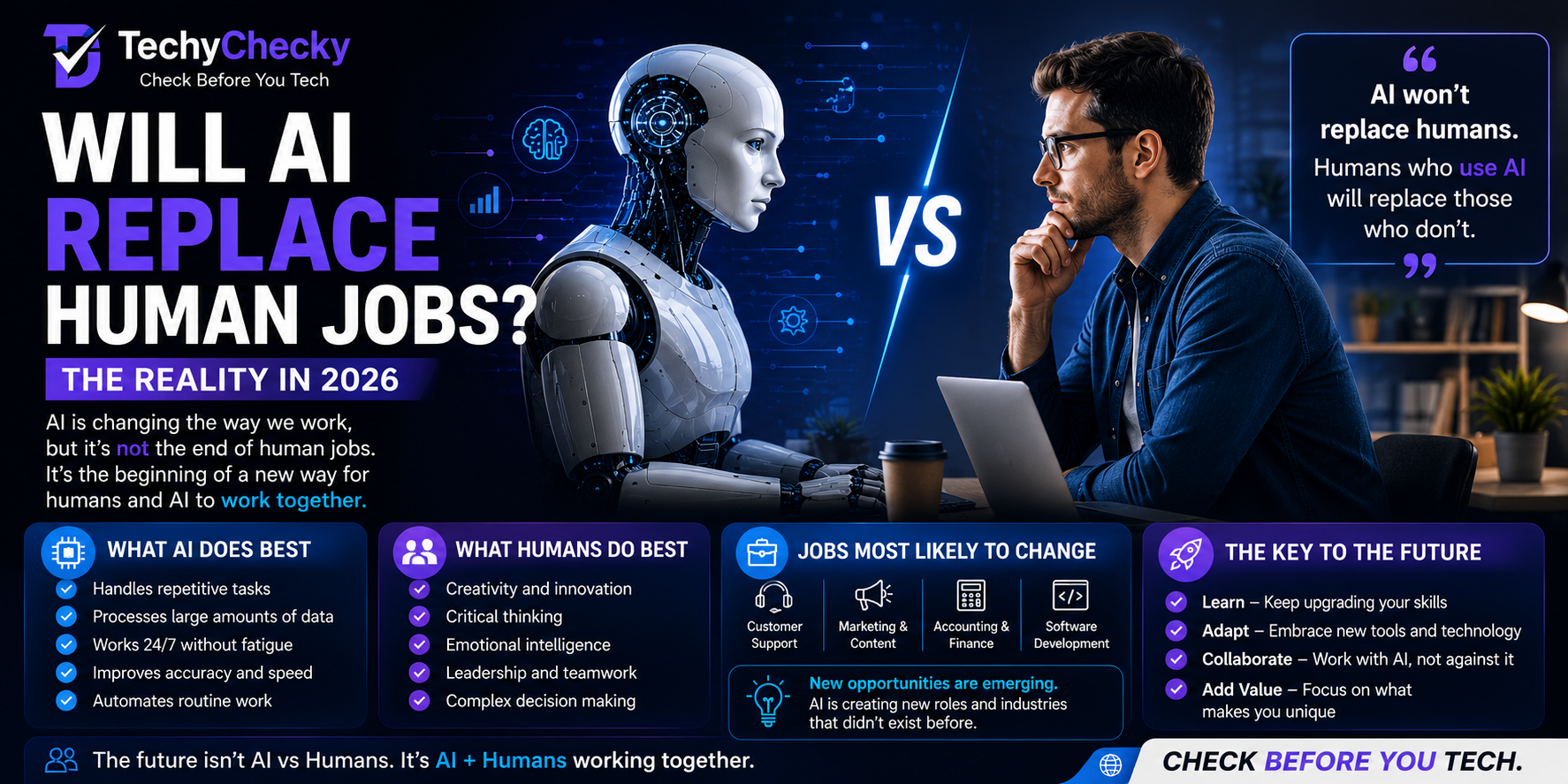
Myth 1: AI Will Replace All Jobs
AI will change many jobs, but history shows that new technologies also create new opportunities.
Many future roles will involve working alongside AI rather than competing against it.
Myth 2: AI Thinks Like Humans
AI can process information quickly, but it does not think, feel, or understand the world the way humans do.
It relies on data and algorithms.
Myth 3: AI Is Only for Large Companies
Today, small businesses, freelancers, and entrepreneurs can access powerful AI tools at affordable prices.
AI is becoming available to everyone.
Challenges of Artificial Intelligence
Like any technology, AI comes with challenges.
Some concerns include:
- Data privacy
- Bias in algorithms
- Job disruption
- Security risks
- Ethical decision making
Responsible AI development will play a critical role in shaping the future of this technology.
The Future of Artificial Intelligence
Experts believe AI will continue transforming industries such as healthcare, education, finance, transportation, manufacturing, and customer service.
Future AI systems may become even more capable of understanding language, solving complex problems, and supporting human decision making.
The businesses and individuals who learn to work with AI today will likely have a significant advantage tomorrow.
Final Thoughts
Artificial Intelligence is not just another technology trend.
It is one of the most important technological developments of our time.
Whether you are a student, entrepreneur, business owner, or technology enthusiast, understanding AI is becoming increasingly valuable.
You do not need to be a programmer or data scientist to benefit from Artificial Intelligence.
The first step is simply understanding what it is and how it works.
The future will belong to those who learn how to use technology effectively, and AI is quickly becoming a major part of that future.
At TechyChecky.com, our goal is to help you understand emerging technologies in a simple and practical way.
Check Before You Tech.
#ArtificialIntelligence, #MachineLearning, #FutureTechnology, #DigitalTransformation